
Mobile Auto Body Repair vs Traditional Body Shops Which Is Right for You
A dented fender does not always need a week in a shop. A crushed quarter panel should not be fixed in a driveway. The right choice comes down to damage type, convenience, cost, quality needs, and how fast the car must be back on the road.
Mobile auto body repair and traditional body shops both solve real problems. They just solve different ones.

What mobile auto body repair does best
Mobile auto body repair brings the repair to the car. A technician works at a home, workplace, parking area, or fleet lot. The setup usually includes portable tools, lighting, fillers, sanding equipment, paint supplies, and sometimes a small shelter.
This option works best for minor to moderate cosmetic damage.
Common mobile repairs include:
Small dents
Scratches
Bumper scuffs
Paint chips
Minor plastic bumper repair
Small paint touch-ups
Headlight restoration
Paintless dent repair when the paint is intact
The main advantage is simple. The car does not need to sit at a shop for days.
The convenience advantage is hard to beat
Mobile repair saves the time tied to drop-off, pickup, rental cars, rides, and waiting rooms. For a small repair, that can matter more than the repair itself.
Example:
A commuter scrapes a rear bumper while backing out of a tight garage. The bumper has paint transfer and shallow scratches. The car drives fine. A mobile technician can often repair that type of damage on-site, while the owner works from home or keeps their normal schedule.
A traditional shop may do the same repair well, but the process can require photos, an estimate appointment, parts review, scheduling, drop-off, and pickup. That can be too much effort for a cosmetic scuff.
Mobile repair can cost less for small jobs
Mobile repairs often have lower overhead than full collision centers. There is no large building to heat, no front office to staff, and no need to move every vehicle through a production line.
That can make mobile repair less expensive for:
Isolated scratches
One-panel touch-ups
Small dents without paint damage
Bumper corner scuffs
Cosmetic repairs paid out of pocket
Cost is not lower every time. If the repair needs several panels blended, a replacement part, or structural inspection, mobile service may not be the right price comparison. The mobile technician may also charge a travel or minimum service fee.
Still, for one small problem on one panel, mobile repair often wins on value.
Turnaround time is often faster
Mobile repairs can be completed the same day when the damage is simple and the technician has the right materials. Paintless dent repair may take less time than body filler, primer, paint, and clear coat work.
Weather can change that. Paint and clear coat need the right conditions. Wind, rain, dust, humidity, and cold temperatures can affect the finish. A good mobile technician will reschedule rather than force a bad repair.
That is a strength, not a weakness. Paint work should not be rushed in poor conditions.
Where traditional body shops still have the edge
Traditional body shops are built for larger repairs. They have dedicated bays, paint booths, frame equipment, measuring systems, lifts, parts storage, and more technicians under one roof.
That matters when damage goes beyond the surface.
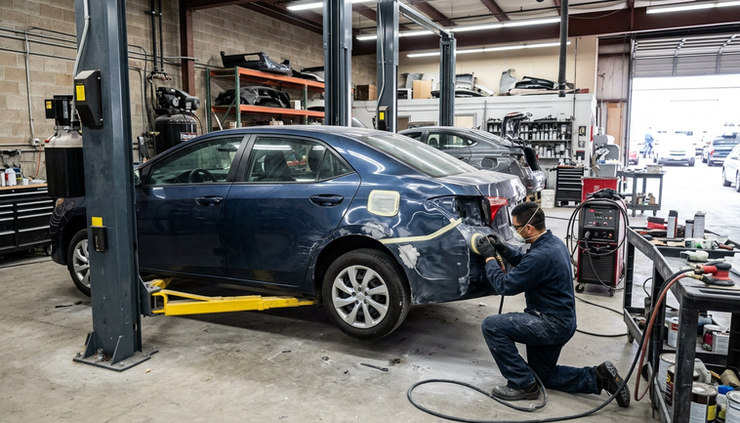
Shops handle structural and complex damage
A traditional body shop is usually the better choice for:
Frame or unibody damage
Airbag deployment
Heavy collision damage
Damage near sensors or safety systems
Deep rust repair
Large paint jobs
Multi-panel blending
Panel replacement
Insurance claim work that needs detailed documentation
Modern vehicles rely on crumple zones, sensors, cameras, wiring, and calibrated safety systems. A bumper cover can hide damage to reinforcement bars, brackets, absorbers, wiring, and sensors.
A driveway repair cannot replace a proper inspection when the impact was hard.
Paint quality is more controlled in a shop
Paint work depends on preparation and environment. A shop paint booth helps control dust, airflow, overspray, temperature, and curing. That does not mean every shop produces perfect work. It means the setting gives technicians better control.
This matters for:
Metallic paint
Pearl paint
Tri-coat finishes
Large panels
Color blending across nearby panels
Show-quality expectations
Repairs on newer or high-value vehicles
Mobile paint work can look excellent on small areas. A skilled technician can blend bumper corners and touch up isolated spots well. But a full door, hood, roof, or quarter panel is a different job.
Shops are better for insurance claims
Insurance work often needs teardown, supplements, photos, documentation, approvals, replacement parts, and sometimes rental coordination. Traditional shops handle this process every day.
A repair estimate based only on visible damage can be incomplete. Once the bumper or panel comes off, hidden damage may appear. Shops are set up to pause, document, request approval, and continue.
Mobile repair is better when the job is clear from the start.
Pros and cons at a glance
Mobile auto body repair
More convenient for small repairs at home or work
Often faster for scratches, small dents, and bumper scuffs
May cost less for minor cosmetic work
Less disruption to daily schedule
Limited by weather, space, and repair complexity
Not ideal for structural damage
Traditional body shop
Better for larger collision damage and hidden damage
Stronger setup for frame, panel, and multi-stage repairs
Better controlled paint environment
Easier insurance claim handling
Can require drop-off, waiting, and rental planning
May cost more for small cosmetic repairs
The split is clear. Mobile is best for convenience and smaller cosmetic repairs. Shops are best for complex repairs and controlled refinishing.
Real-life repair scenarios show the difference
The easiest way to choose is to compare common situations.
Case example one is the parking lot door ding
A driver comes back to a car with a small door ding. The paint is not cracked. The dent sits in the middle of the panel, away from the edge.
Best fit: Mobile repair
Paintless dent repair can often remove this kind of ding without sanding or repainting. Since the paint is intact, the technician works the metal back into shape using access tools and light reflection.
Why mobile makes sense:
No part replacement
No paint booth needed
Short repair window
Low disruption
Lower chance of color mismatch because no paint is applied
A body shop can handle it too. But for one clean door ding, shop scheduling may add unnecessary time.
Case example two is the scraped bumper before a lease return
A driver needs to return a leased vehicle. The front bumper has a scuffed corner from a concrete post. The plastic is not torn. The headlight, grille, and parking sensors work.
Best fit: Mobile repair, if the damage is surface-level
This is a strong use case for mobile service. The technician can sand the scuffed area, repair minor gouges, prime, paint, and clear coat the corner.
The key question is whether the scuff is truly minor. If the bumper is cracked, mounting tabs are broken, or sensors were hit, a traditional shop may be better.
Why mobile makes sense:
The car stays available most of the day
The repair area is small
The owner may avoid a larger shop bill
Turnaround can be quick
The risk is quality. A poor color match on a bumper can stand out in bright sunlight. Ask how the technician matches paint and whether the repair includes clear coat blending.

Case example three is the rear-end collision with hidden damage
A vehicle is hit from behind at a stop. The bumper cover has cracks. The trunk does not close smoothly. Warning lights appear after the impact.
Best fit: Traditional body shop
This is not a cosmetic-only job. The impact may have damaged the bumper reinforcement, rear body panel, trunk floor, sensors, wiring, exhaust mounts, or alignment points.
A mobile cosmetic repair could make the bumper look better, but it would not answer the safety question.
Why a shop makes sense:
The vehicle needs teardown and inspection
Safety systems may need diagnosis
Parts may need replacement
The repair may involve insurance
Paint may need blending across larger areas
This is where convenience should not lead the decision. The repair needs proper equipment and documentation.
Case example four is the work vehicle with minor fleet damage
A service van has three small scratches and one shallow dent. It stays in use during business hours. Pulling it from service for several days would affect the schedule.
Best fit: Mobile repair, if the damage is cosmetic
Mobile repair can be useful for fleets because the technician can repair several vehicles at one location. The business avoids multiple shop appointments and extra downtime.
The limits still apply. If the van has rust, deep metal damage, or a large panel crease, a shop may produce a better result.
How to compare cost without guessing
Price depends on size, location, paint type, labor time, parts, and damage depth. A cheap repair is not a good deal if it fails early or looks wrong.
Use the same checklist for both options.
Ask what the estimate includes
A clear estimate should explain:
Which panels will be repaired
Whether paint will be blended
Whether parts are included
Whether hidden damage could change the price
How long the repair should take
What warranty or workmanship promise applies
A vague estimate can create problems later. “Fix scratch” is not enough. “Repair and refinish right rear bumper corner” is better.
Compare the repair method, not just the price
Two quotes can describe very different work.
One technician may touch up chips with a brush. Another may sand, prime, spray, blend, and clear coat. Those repairs will not look the same or last the same.
For dents, one quote may include paintless dent repair. Another may include filler and repainting. The right method depends on the damage.
Watch for prices that skip necessary work
Low prices often leave out prep. Prep affects the final result. Paint needs a clean surface, correct sanding, proper masking, compatible materials, and curing time.
If the repair involves safety systems, parts, or structure, do not choose based only on price.
How quality differs between the two options
Quality is not only about mobile versus shop. It is about skill, process, materials, and honesty.
A skilled mobile technician can outperform a careless shop on a small scuff. A strong body shop can produce a factory-like finish on complex work that mobile service cannot reasonably attempt.
Look for these signs of quality:
Clean explanation of the process
Clear limits on what can be fixed on-site
Before-and-after examples without logos or copied images
Good masking and prep habits
Written estimate
Written warranty terms
Willingness to refer the job to a shop when needed
The last point matters. A technician who says “this needs a body shop” is protecting the vehicle and the customer.
Turnaround time can be simple or misleading
Mobile repair often wins on small jobs because scheduling and logistics are lighter. The vehicle does not wait behind larger collision jobs.
Traditional shops can take longer for valid reasons:
Parts must arrive
Insurance approval may be needed
Hidden damage may appear after teardown
Paint booth time must be scheduled
Calibration or mechanical work may be needed
That wait can be frustrating, but it may be part of doing the job correctly.
A fast repair is valuable only when the scope is right. A rushed structural repair is a risk. A same-day scratch repair can be a smart choice.

A simple way to choose
Use this guide before booking.
Choose mobile auto body repair when:
The damage is cosmetic
The car drives normally
No warning lights appeared after the incident
The paint issue is small and local
The dent is shallow
No panel gaps changed
Convenience matters
Paying out of pocket makes sense
Choose a traditional body shop when:
The impact was hard
A panel needs replacement
The frame or structure may be affected
The car has warning lights
The bumper, trunk, hood, or doors do not align
Sensors, cameras, or lights may be damaged
The repair involves insurance
The paint work covers large areas
When in doubt, get an inspection. Cosmetic damage can hide deeper problems, especially after a collision.
FAQ
Is mobile auto body repair as good as a traditional body shop?
For small cosmetic repairs, it can be. For complex collision repair, structural work, large paint jobs, and hidden damage, a traditional body shop is usually the better choice.
Can mobile technicians match paint color?
Many can match paint well on small areas. Large panels, metallic colors, pearl finishes, and multi-panel blending are harder to control outside a shop environment.
Is mobile repair cheaper?
It can be cheaper for small dents, scratches, and bumper scuffs because overhead is lower and the job is focused. It may not be cheaper if the repair needs parts, blending, or several panels.
Should insurance repairs go to a body shop?
Most larger insurance repairs are better suited to a traditional shop. Shops can handle teardown, hidden damage, supplements, documentation, and parts coordination.
How do I know if damage is only cosmetic?
Look for warning lights, uneven panel gaps, broken mounting points, cracked parts, doors or trunk lids that do not close correctly, and sensor problems. If any of those appear, choose a shop inspection.
The right choice depends on the damage
Mobile repair is the better choice for many small problems. It is convenient, fast, and often cost-effective. It works well for door dings, bumper scuffs, paint chips, and minor scratches.
Traditional body shops still have the advantage for serious damage. They offer controlled paint conditions, more equipment, insurance support, and deeper repair capability.
The best decision is not about which option is better overall. It is about matching the repair method to the damage. If the car only needs a cosmetic fix, mobile service can save time and money. If safety, structure, sensors, or large paint areas are involved, book a traditional body shop and let the repair take the time it needs.
Comments